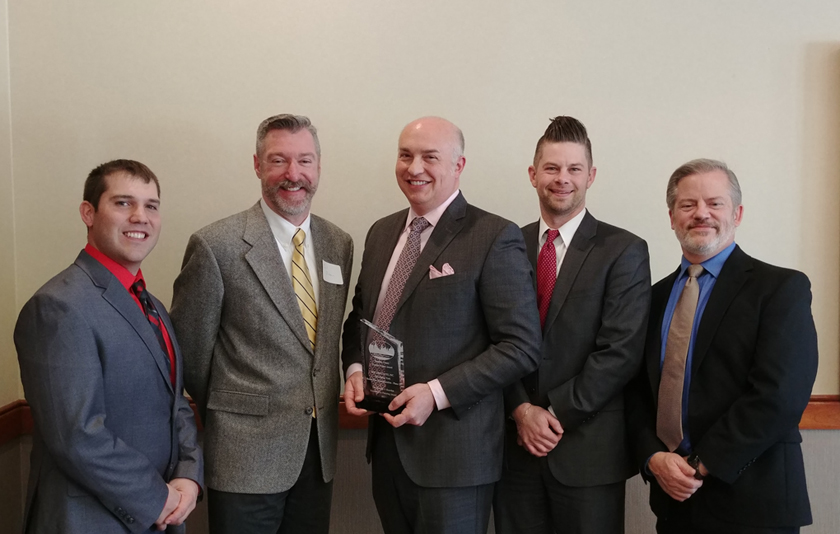
Herbert, Rowland & Grubic, Inc. (HRG) is pleased to announce that Jeffrey A. Mikesic, P.E., has been promoted to practice area leader for the firm’s Transportation Group.
He will have four areas of primary responsibility: vision and strategy, professional development of staff, project delivery, and business development. As the leader of the Transportation Group, he will monitor technical and regulatory trends related to roads, bridges, traffic management, rail and aviation for the firm’s public and private sector clients. He will translate those trends into a coherent strategy for meeting client needs, and he will empower staff to execute that strategy through communication, culture, and professional development initiatives. He will also ensure projects are delivered in conformance with the firm’s Quality Management Plan and will continue to serve as project manager for key clients and complex projects. In addition, he will support business development activities across HRG’s entire service area.
Mikesic joined HRG in 1998 as a CADD technician. Over the next six years, he attended classes nights and weekends to obtain his civil engineering technology degree from Point Park University. Thanks to that strong work ethic and commitment to personal growth, he steadily earned increasing responsibility at HRG through several promotions. He was named a staff professional in 2005 and a project manager in 2012, and he most recently served as a team leader before being promoted to practice area leader.
“Jeff exemplifies the ideal employee-owner at HRG. He has always looked for new ways to grow and contribute to HRG’s success, and this has made him a very valuable member of the team. He will be an exceptional leader for the Transportation Group because his experience gives him unique insight into the role every member of the group plays.”
– Andrew Kenworthy, Chief Operating Officer
ABOUT HRG
Herbert, Rowland & Grubic, Inc. (HRG) is a nationally ranked design firm providing civil engineering, surveying, and environmental services. The firm was founded in Harrisburg in 1962 and has grown to employ more than 200 people in Pennsylvania, Ohio, and West Virginia. For more information, please visit the website at www.hrg-inc.com.
https://hrg-inc.com/wp-content/uploads/2019/03/Mikesic-Promotion-to-PAL-slider_featured.jpg548733Judy Lincolnhttps://hrg-inc.com/wp-content/uploads/2023/01/Primary-Logo-300x138.pngJudy Lincoln2019-03-19 10:20:322019-03-19 10:20:32Jeff Mikesic Promoted to Transportation Practice Area Leader
https://hrg-inc.com/wp-content/uploads/2018/12/Roadway-PMP-insight-featured-image.jpg548733Judy Lincolnhttps://hrg-inc.com/wp-content/uploads/2023/01/Primary-Logo-300x138.pngJudy Lincoln2018-12-05 11:15:492018-12-05 11:24:105 Reasons You Should Consider a Roadway Pavement Management Program
Cumberland County has been recognized with a Road & Bridge Safety Award for the Craighead Bridge replacement project. The award is given jointly each year by the Pennsylvania Highway Information Association, County Commissioners Association of Pennsylvania, and PennDOT to the best road and bridge safety improvement projects undertaken by county governments across the state.
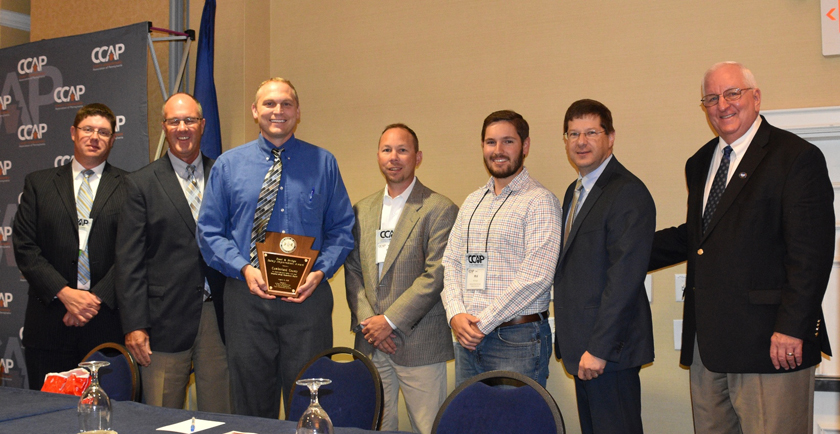
The county’s director of planning, Kirk Stoner, accepted the award on behalf of the commissioners at the County Commissioners Association of Pennsylvania Conference in Gettysburg yesterday.
(From left) Jason W. Wagner, Managing Director, Pennsylvania Highway Information Association; Brian D. Emberg, retired Senior Vice President, Herbert Rowland and Grubic, Inc.; Kirk Stoner, AICP, Director of Planning, Cumberland County; Fred Thompson, Vice President, Kinsley Construction; Phil Royer, Estimator/Project Manager, Kinsley Construction; James D. Ritzman, PennDOT Deputy Secretary for Planning; and County Commissioners Association of Pennsylvania President and Lancaster County Commissioner Dennis Stuckey.
Herbert, Rowland & Grubic, Inc. designed the replacement bridge for Cumberland County, which improves safety for local residents in several ways:
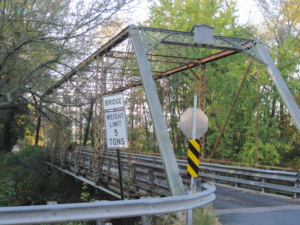
The new bridge is stronger and replaces one with more than 100 years of wear and tear.
The new bridge can safely carry two lanes of traffic, where the previous bridge could only carry one.
Back-ups and rear-end collisions had occurred frequently at the original bridge and have been eliminated by the new bridge.
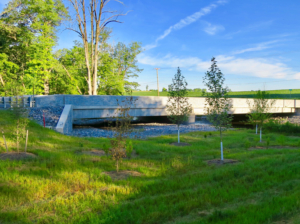
The replacement bridge was built on a new alignment that gives drivers a better view of oncoming traffic.
The new bridge has a flared intersection where Zion Road meets Old York Road. This makes it easier for drivers to turn onto and off of the bridge.
The new bridge has no weight restrictions, and its improved sight distance and turning radii make it easier for emergency vehicles, school buses, and delivery trucks to reach local residents.
The original Craighead Bridge held a special place in the heart of the community and is even featured on the South Middleton Township seal. The county struck a deal with a non-profit organization to preserve the original bridge for bike and pedestrian use, so that future generations can continue to connect with this historic fixture along the Yellow Breeches creek. Local residents get the safety and convenience of a modern bridge while preserving the charm and memories of the original bridge.
Original Bridge
New Bridge
ABOUT CUMBERLAND COUNTY
Cumberland County is the fastest growing county in the Commonwealth and offers the perfect mix of small town,
suburban and rural living. Established in 1750, Cumberland County consistently maintains one of the lowest tax
and unemployment rates in the State, while providing exceptional services for its more than 250,000 residents. More
information on Cumberland County can be found at www.ccpa.net
ABOUT HRG
HRG is a nationally ranked Top 500 Design Firm, providing civil engineering, surveying and environmental services to public and private sector clients. The 200-person employee-owned firm currently has office locations in Pennsylvania, Ohio, and West Virginia. For more information, please visit the website at www.hrg-inc.com.
https://hrg-inc.com/wp-content/uploads/2018/08/Featured_Craighead-Bridge.jpg548733Judy Lincolnhttps://hrg-inc.com/wp-content/uploads/2023/01/Primary-Logo-300x138.pngJudy Lincoln2018-08-09 11:47:152024-08-30 09:49:20Cumberland County Receives Safety Award for Craighead Bridge
We regularly hear about the condition of infrastructure in the United States, and many times the news is bad. Too often we hear about underground pipes breaking, roads crumbling, and bridges that need to be closed. Fortunately, in Londonderry Township, bridge conditions are actually pretty good.
Londonderry Township is specifically responsible for 13 bridges, all of which cross waterways and are less than 20’ in length. Closing any one of these bridges for safety concerns could cause a significant disruption to emergency access and general traffic flow. To avoid this, Londonderry Township asked HRG to assess all 13 structures and prioritize their maintenance and replacement needs. Our evaluation indicated that all 13 bridges were likely more than 50 years old, and six of them should be replaced within the next 3 – 10 years.
HRG worked with the township to create an approach to address this pressing infrastructure need without overburdening the township’s annual budget. The initial concept was to replace one bridge every other year for the six most critical structures. This would allow us to address the township’s most urgent needs without being forced into an emergency situation. It would also allow us to identify alternative funding for each bridge replacement and carefully plan any necessary road closures to minimize traffic interruption.
Londonderry’s program is a perfect example of infrastructure asset management and capital improvement planning. HRG has written extensively about the benefits of asset management and capital improvement planning. Essentially, a proactive approach to identifying infrastructure needs, prioritizing those needs, and planning for the necessary funding produces better infrastructure at a lower lifetime cost.
Thanks to this forward-looking approach, Londonderry Township is about to replace the last of the original six critical structures: a bridge on Swatara Creek Road. This project is funded through the partial use of a Dauphin County Local Share Gaming Grant.
Three bridges were replaced in 2016: one each on Beagle, Braeburn, and Hollendale Roads. The township bundled these bridges into one project and used extremely favorable funding from the Dauphin County Infrastructure Bank. The first two bridges were replaced in 2012. Only one – on Round Top Road, was planned, but a second bridge on Foxianna Road required replacement after flooding from Tropical Storm Lee undermined the bridge. Fortunately, because of the emergency nature of the bridge replacement, the township was able to use federal disaster relief funding.
With the replacement of the six most critical bridge structures complete, the township will be able to focus on regular maintenance of the remaining seven structures to extend their useful life as long as possible. A proactive approach to maintenance like this means better driving conditions for township drivers over a longer period of time. The bridges will last longer, and the need for replacement will be delayed. This will save the township hundreds of thousands of dollars over time. (See an illustration of how this works with actual budget dollars in our article Better Roads for Less Money with Asset Management.)
The upkeep of bridges can seem like a daunting and expensive task, but it’s actually fairly simple if communities take a proactive approach. Consistent inspections to identify deterioration, regular maintenance to avoid worsening problems, and advanced planning for eventual replacement all combine to simplify bridge upkeep and ensure it remains affordable.
When it does come time for Londonderry Township to replace one of its structures, they will use the same judicial approach to ensure the infrastructure needs of the township are met in an economical manner.
(A version of this article originally appeared in the Londonderry Township newsletter.)
Andrew Kenworthy, P.E., is the eastern region vice president of HRG. He has more than 25 years of experience in municipal engineering and land development/site design.
This article about the Dauphin County Infrastructure Bank is excerpted from the February 2018 issue of Pennsylvania County News magazine. It is provided courtesy of the County Commissioners Association of Pennsylvania (CCAP) and is reprinted here with their permission. This is in no way an endorsement by CCAP of the products or services offered by HRG.
What would you do with an extra $350,000 per year in your county Liquid Fuels budget?
It sounds like a nice problem to have, doesn’t it?
That’s exactly the challenge Dauphin County faced six years ago as its aggressive bridge management program reached a very important milestone: The last load-posted, structurally deficient bridge in the county’s inventory was fully programmed to be replaced.
This video tells the story of the last structurally deficient bridge in Dauphin County. Once the county funded the replacement of this bridge, it had a surplus of Liquid Fuels money in its budget. They decided to use this surplus as seed money for an infrastructure bank that has funded more than a dozen roadway, traffic and bridge improvements throughout the county in just a few years. (Learn more about the county’s last structurally deficient bridge in this profile.)
For almost 30 years, the county had patiently and strategically planned the rehabilitation or replacement of 51 bridges. Close to 1/3 of its county-wide inventory had been structurally deficient at the time they embarked on this effort in 1984.
Now that hard work and determination was about to pay off. The county could drastically reduce its spending on bridge capital improvements by shifting from a replacement phase to a maintenance phase.
The county’s engineer, Herbert, Rowland & Grubic, Inc. (HRG), analyzed what investments would be necessary to proactively maintain the bridges and determined that the county would have an annual surplus of approximately $350,000 in Liquid Fuels funding beyond what was needed for maintenance expenses.
County commissioner Jeff Haste wanted to make sure the money was used wisely: “The county’s bridge management program had delivered tremendous value to our residents, drastically improving the safety and efficiency of our transportation system for drivers. We wanted to use this money to deliver even more value.”
County Commissioners Haste, Pries and Hartwick wanted to maximize the benefit of these surplus dollars for county residents. The infrastructure bank approach has allowed them to fund more than $11 million in improvements with an initial investment of $1 million.
Haste and his fellow commissioners, Mike Pries and George P. Hartwick, III, were thinking big, but regulatory requirements threatened to make the impact of this money small.
“Because of the forced distribution procedure associated with Liquid Fuels funding,” Haste explained, “the county had to come up with a use for this money or disburse it evenly to all 40 of our member municipalities.”
On average, each municipality would’ve received less than $10,000, which is too small a sum to do anything more significant that buy a little extra road salt for the winter.
Yet, even if the county used the entire $350,000 surplus itself, they wouldn’t be able to cover the cost of even one small capital improvement like a single-span bridge replacement (which typically costs between $500,000 to $1 million).
Haste, Pries and Hartwick wanted to have a larger impact, so they asked county staff to collaborate on a solution with the engineer who’d designed the successful bridge management program in the first place.
Together, they came up with an innovative program in which the county would use this annual Liquid Fuels surplus to dramatically reduce the cost of infrastructure improvements for local municipalities.
How the Dauphin County Infrastructure Bank Works
The Dauphin County Infrastructure Bank offers loans to municipalities (or private sector companies) to design and construct local roadway, bridge and traffic improvements – at unbeatably low interest rates. Municipalities can borrow money for as little as 0.5% interest. (Private sector borrowers pay a 1% interest rate.)
As an added bonus, Dauphin County provides loan recipients with optional engineering design support. This is very beneficial to smaller municipalities who have never completed a large capital improvement project before and may not know how to navigate the complicated state and federal requirements these projects must meet. An experienced consultant can save these municipalities from costly and time-consuming mistakes and re-work.
But, if $350,000 wasn’t enough money for the county to complete one major capital improvement project on its own, how can it use that money to fund multiple projects by its municipalities?
The power of partnerships.
Dauphin County multiplies the value of its $350,000 investment by combining it with additional funding from Pennsylvania’s state infrastructure bank.
Essentially, the county uses its Liquid Fuels surplus to make it more affordable for municipalities and private sector organizations to borrow money from the state by paying a portion of their interest. Interest on Pennsylvania Infrastructure Bank loans can vary, but it is currently 2.125% at the time this article is being written.
A municipality could borrow funds directly from the Pennsylvania Infrastructure Bank at an interest rate of just over 2%, or it could borrow from Dauphin County, and the county would pay approximately 75% of the interest expenses.
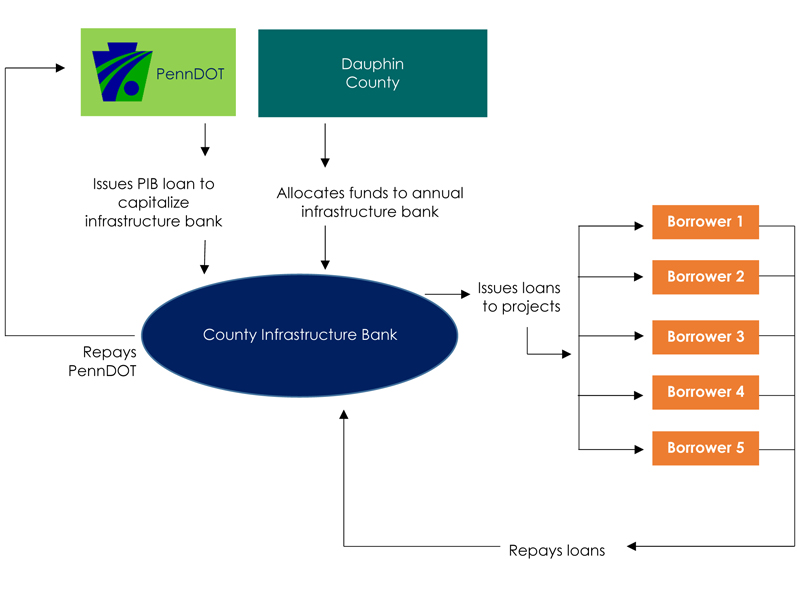
The following diagram shows exactly how the Dauphin County Infrastructure Bank funds its projects:
It is a self-renewing process. As municipalities or private sector organizations repay their loan to the county infrastructure bank, the county repays PennDOT. Once the debt is satisfied, the county has the ability to issue new loans to other municipalities or private sector companies.
For some municipalities, the cost savings provided by an infrastructure bank loan can be the difference between being able to move forward with a project at all or having to postpone it a few more years.
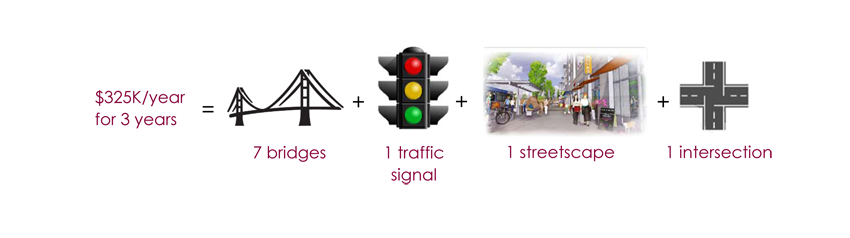
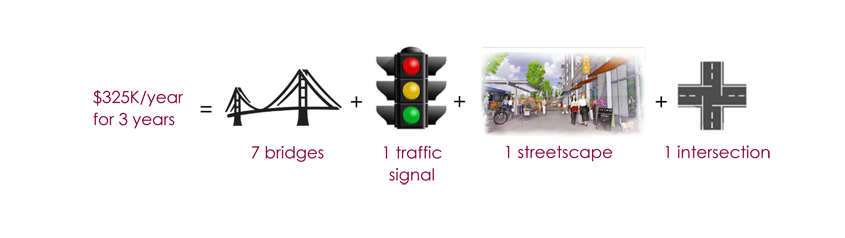
In the first three years of the infrastructure bank program, Dauphin County multiplied close to $1 million in Liquid Fuels funding into $11 million worth of improvements to the local transportation system: 7 bridges, one traffic signal, one streetscape, and one intersection improvement.
“This is the kind of dramatic impact we were hoping to have,” says Pries, who oversees Dauphin County’s Community and Economic Development Department.
“The success of our bridge program and the creation of the Dauphin County Infrastructure Bank has allowed us to help residents without the need to raise property taxes. Unlike many other parts of the country, our residents don’t have to worry about crumbling bridges and road networks.”
Read more about the Dauphin County Infrastructure Bank, the benefits of implementing an infrastructure bank in your county, and other counties that are considering a program of their own in the February 2018 issue of Pennsylvania County News.
https://hrg-inc.com/wp-content/uploads/2016/09/Duke-Street_after.png630843Judy Lincolnhttps://hrg-inc.com/wp-content/uploads/2023/01/Primary-Logo-300x138.pngJudy Lincoln2018-02-08 13:33:262024-08-30 09:52:49How Dauphin County Has Turned a Small Surplus Into Major Infrastructure Improvements
Herbert, Rowland & Grubic, Inc. (HRG) is pleased to announce that two of our projects have been selected by Dauphin County in its annual Premier Projects award program.
Since its inception six years ago, the Dauphin County Premier Projects program has honored more than two dozen projects that promote smart growth and spark revitalization throughout the region. Among this year’s honorees, HRG provided engineering services for two of them: enhancements to Fort Hunter Park and realignment of Park Boulevard.
Park Boulevard
A broad range of local leaders from Derry Township, Dauphin County, and area businesses worked together on the realignment of Park Boulevard to support future economic development in Hershey. The new roadway provides several safety improvements:
It replaces a 60-year old bridge over Spring Creek, which was structurally deficient and weight-restricted.
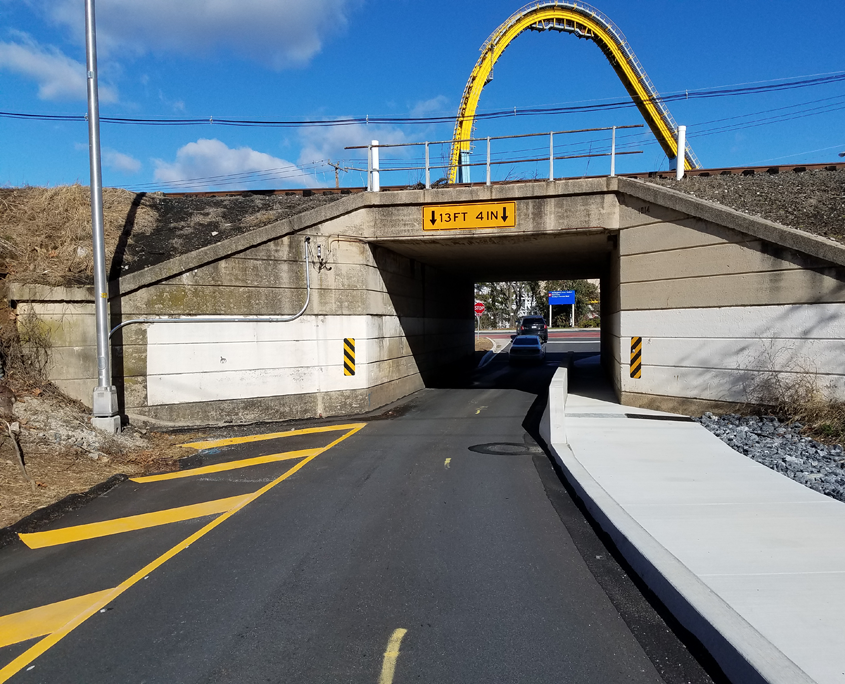
It converts a narrow roadway beneath the Norfolk-Southern underpass from two-way traffic to one-way traffic. This reduces the potential for vehicular accidents and allows for the installation of a sidewalk that is segregated from through traffic.
It improves emergency response time by adding a roadway connection from northbound Park Boulevard. (Previously, first responders had to drive a circuitous route through several intersections to access this area. Now crews can reach the area 2-3 minutes faster.)
It provides a new shared-use sidewalk that will enhance safety for pedestrians traveling to Hershey’s attractions from downtown.
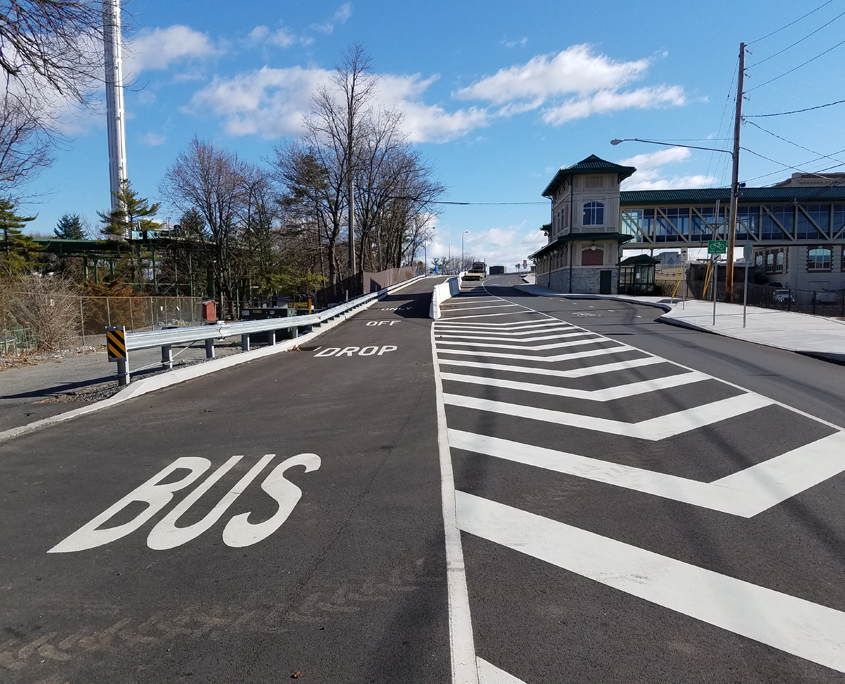
It adds a safe zone for people boarding and exiting buses at the Hershey Intermodal Transportation Center. This zone is physically protected from through-traffic.
Front Row: Chuck Emerick, Matt Weir, John Foley, Susan Cort, Justin Engle Back Row: Chris Brown, Patrick O’Rourke, John Payne, Brian Emberg, Tom Mehaffie, III, Matt Lena, Lauren Zumbrun
Fort Hunter Park
Fort Hunter Park seamlessly blends new amenities with environmental protection and a celebration of the area’s history and wildlife. The enhanced park includes two new boat launches that provide access to Fishing Creek and the Susquehanna River, new pedestrian paths, new seating to enjoy the scenic views, and new outdoor gathering spaces to accommodate park festivals. It also includes expanded parking to make it easier for locals to access and enjoy these new park features.
To protect the scenic and tranquil environmental setting, engineers used innovative techniques to collect and treat stormwater like porous pavement. They also replaced two paved median areas with soil, stone and native plantings to retain and filter stormwater runoff while enhancing the appearance of the roadway. A new basin for collecting stormwater is designed to blend with the adjoining woodland edge, and herbaceous plantings and indigenous trees help to improve a local habitat area.
Signage in the enhanced habitat area describes local wildlife for park users, while other signs in the park inform visitors of past river activities such as Native American gatherings, early transportation, and coal reclamation.
Chad Gladfelter, Carl Dickson, John Hershey, Matt Bonanno, Steve Deck
ABOUT HRG
Herbert, Rowland & Grubic, Inc. (HRG) is a nationally ranked design firm providing civil engineering, surveying, and environmental services. The firm was founded in Harrisburg in 1962 and has grown to employ more than 200 people in Pennsylvania, Ohio, and West Virginia. For more information, please visit the website at www.hrg-inc.com.
https://hrg-inc.com/wp-content/uploads/2018/01/FeaturedImage_PremierProjects2018.png265354Judy Lincolnhttps://hrg-inc.com/wp-content/uploads/2023/01/Primary-Logo-300x138.pngJudy Lincoln2018-01-10 12:48:002018-06-04 08:24:00Park Boulevard Realignment and Fort Hunter Park Enhancements Honored as Premier Projects by Dauphin County
Wider bridge improves access for emergency vehicles and pedestrians while reducing the likelihood of car accidents
The Duke Street Bridge replacement has been honored with a Road & Bridge Safety Award from the Pennsylvania Highway Information Association, County Commissioners Association of Pennsylvania, and PennDOT.
Herbert, Rowland & Grubic, Inc. designed the project for Dauphin County, which improves safety for local residents in several ways:
It improves emergency access for residents who live near the bridge. The original Duke Street Bridge couldn’t carry vehicles weighing more than 3 tons, which meant most of the vehicles operated by the Hummelstown Borough Fire Company and Union Deposit Fire Company couldn’t use the bridge. The new bridge has no weight restrictions, and emergency vehicles can safely cross it (as shown in the attached photo).
It safely accommodates two lanes of traffic, whereas the original Duke Street Bridge was only wide enough for one lane of traffic at a time.
It makes it safer for drivers to turn onto South Hoernerstown Road from North Duke Street, thanks to increased intersection radii. Previously drivers of large vehicles turning right onto South Hoernerstown Road from Duke Street would cross into the opposing lane. Limited sight distance at this location meant that opposing traffic could not see these vehicles crossing over into their lane with optimum time to react. The new wider intersection will drastically reduce the likelihood of accidents at this location in the future.
It provides a new sidewalk. The previous Duke Street Bridge had no existing sidewalk; accordingly, pedestrians would often walk in the roadway lanes to cross from one municipality to the other. The new bridge includes a sidewalk that will enhance safety for pedestrians trying to access the United Water Trailhead and Swatara Creek Trail.
ABOUT HRG
Founded in 1962, HRG has grown to be a nationally ranked Top 500 Design Firm, providing civil engineering, surveying and environmental services to public and private sector clients. The 200-person employee-owned firm currently has office locations in Pennsylvania, Ohio, and West Virginia. For more information, please visit the website at www.hrg-inc.com.
https://hrg-inc.com/wp-content/uploads/2017/09/DukeStreetVideo-PR.png548733Judy Lincolnhttps://hrg-inc.com/wp-content/uploads/2023/01/Primary-Logo-300x138.pngJudy Lincoln2017-09-01 10:27:422017-09-05 13:58:09Duke Street Bridge Honored with Safety Award
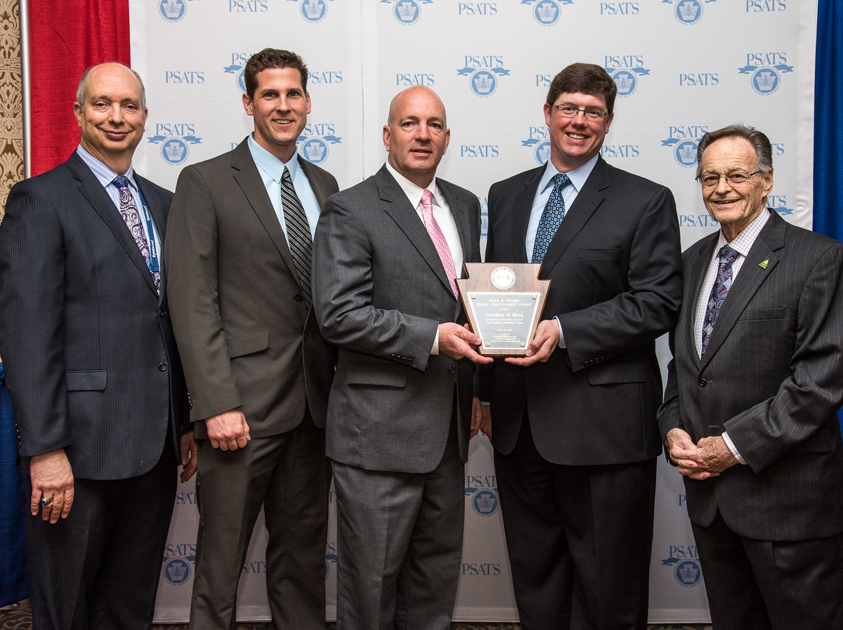
Representatives of Derry Township in Dauphin County accept the first-place roadway award in the Road and Bridge Safety Improvement Awards at the Pennsylvania State Association of Township Supervisors’ (PSATS) 95th Annual Educational Conference April 23-26 in Hershey. Sponsored by PSATS, the Pennsylvania Highway Information Association (PHIA), and the state Department of Transportation, the award recognizes townships for their extensive contributions to making roads and bridges safer. Participating in the presentation are, from left, PennDOT Director of Planning and Research Laine Heltebridle; Matthew Lena, P.E., transportation team leader, Herbert, Rowland & Grubic, Inc.; Derry Township Chairman John Foley; PHIA Managing Director Jason Wagner; and PSATS Executive Board Member Bill Hawk. (Photo courtesy of the Pennsylvania State Association of Township Supervisors.)
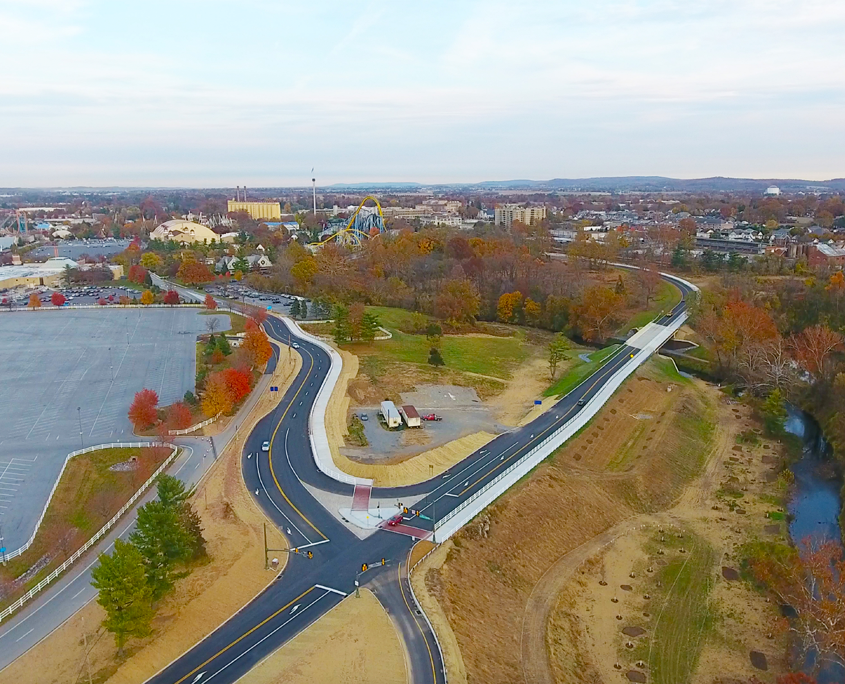
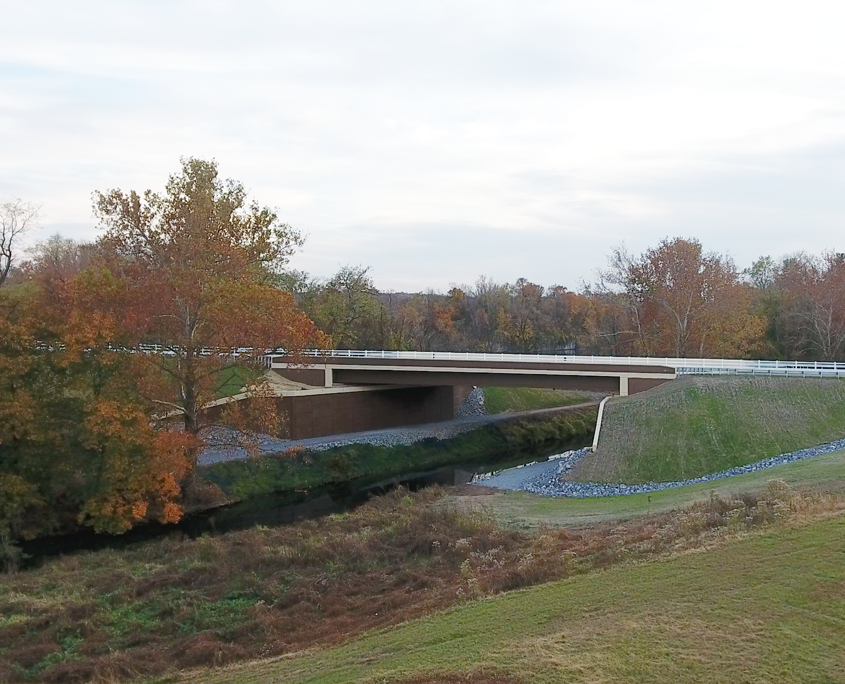
The realignment of Park Boulevard has been honored with a Road & Bridge Safety Award from the Pennsylvania Highway Information Association, Pennsylvania State Association of Township Supervisors, and PennDOT. The award was presented to Derry Township officials at the Pennsylvania State Association of Township Supervisors Conference at the Hershey Lodge on April 24, 2017.
Herbert, Rowland & Grubic, Inc. designed the project for Derry Township and devised a creative funding strategy that expedited the project schedule.
A broad range of local leaders from Derry Township, Dauphin County, and area businesses worked together on this project to support future economic development in Hershey. The new roadway provides several safety improvements:
It replaces a 60-year old bridge over Spring Creek, which was structurally deficient and weight-restricted.
It converts a narrow roadway beneath the Norfolk-Southern underpass from two-way traffic to one-way traffic. (The roadway is not wide enough for two opposing lanes of traffic to safely pass each other, so switching to one-way traffic will prevent vehicle conflicts.)
It improves emergency response time by adding a roadway connection from northbound Park Boulevard. (Previously, first responders had to drive a circuitous route through several intersections to access this area. Now crews can reach the area 2-3 minutes faster.)
It provides a new sidewalk that will enhance safety for pedestrians traveling to Hershey’s attractions from downtown.
It adds a safe zone for people boarding and exiting buses at the Hershey Intermodal Transportation Center. This zone is physically protected from through-traffic.
The realigned Park Boulevard was completed and opened to traffic in the fall of 2016. View a slideshow of project photos below.
https://hrg-inc.com/wp-content/uploads/2017/05/PSATS-Road-Bridge-Safety-Award-2017_Park-Boulevard_733x548.jpg630843Judy Lincolnhttps://hrg-inc.com/wp-content/uploads/2023/01/Primary-Logo-300x138.pngJudy Lincoln2017-05-12 11:51:182021-07-22 13:27:19Park Boulevard Realignment in Hershey Honored with Safety Award
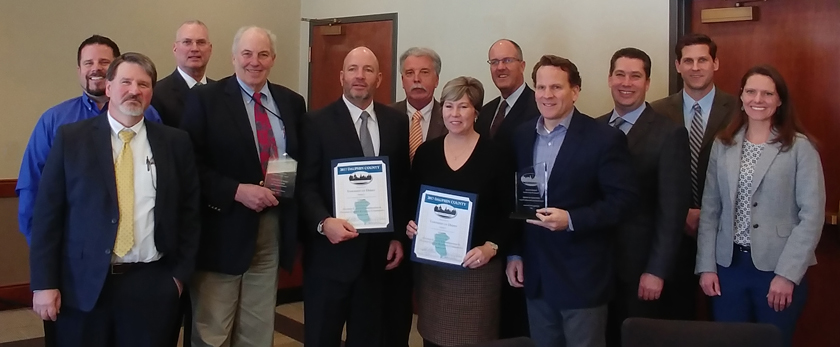
Herbert, Rowland & Grubic, Inc. (HRG) is pleased to announce that our client Dauphin County received a Governor’s Award for Local Government Excellence for the infrastructure bank program we helped them create. The award for “innovative community or government initiative” was presented to Dauphin County officials at the Governor’s Residence on April 12, 2017. Commissioners George Hartwick, Jeff Haste, and Mike Pries attended the ceremony with George Connor, the executive director of Dauphin County’s Department of Community and Economic Development and the administrator of the infrastructure bank program.
HRG worked with PennDOT and Dauphin County officials to develop this program, which provides a creative solution to one of local government’s biggest challenges: successfully maintaining and replacing infrastructure. It leverages the county’s Liquid Fuels funding and the underutilized Pennsylvania Infrastructure Bank program to stretch the value of local government dollars. In its first three years, Dauphin County turned an annual investment of $325,000 in Liquid Fuels money into 10 projects worth $11 million: 7 bridges, 1 streetscape, 1 intersection improvement, and 1 traffic signal improvement.
While people on both sides of the aisle agree that infrastructure improvements are badly needed, the debate often stalls over where the money will come from to pay for these improvements. The Dauphin County Infrastructure Bank shows that new revenue is not necessarily needed to begin addressing these problems; applying existing revenue in new ways can help us make significant progress. By combining several sources of funding – each of which would’ve been inadequate to meet the infrastructure need alone – the Dauphin County Infrastructure Bank has accomplished so much more for the county’s residents than these funding sources could’ve done individually.
Brian Emberg is an engineer who helped develop this program. He began working with the county in the 1980s on a similarly forward-thinking program that helped the county eliminate significant structural deficiency of its bridges. (In 1984, one-third of the county’s bridges were structurally deficient, but today the county has no load-posted, structurally deficient bridges at all, thanks to a bridge management system they designed with HRG.)
Emberg says, “Dauphin County’s officials are dedicated public servants and true visionaries. They continually challenge the status quo to deliver the best service to their constituents for the highest return on public tax dollars. This program provides a great example to other counties on how the seemingly impossible task of addressing our infrastructure can be solved.”
Indeed, HRG is currently in talks with counties around the state about implementing similar infrastructure bank programs of their own. Though Dauphin County uses its program for transportation improvements, the program can be used to fund any type of infrastructure, depending on the sources of money used to capitalize the loan program.
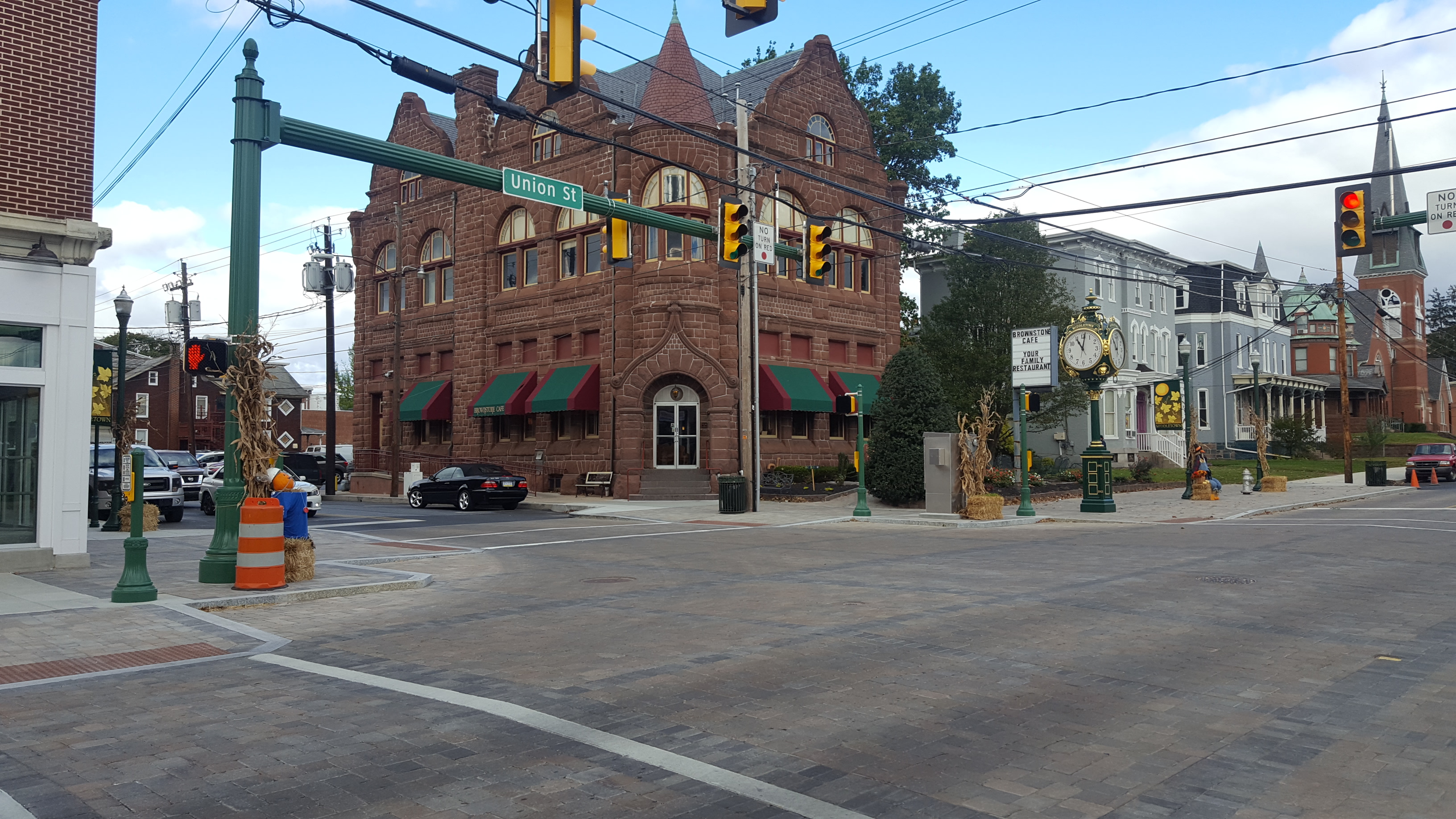
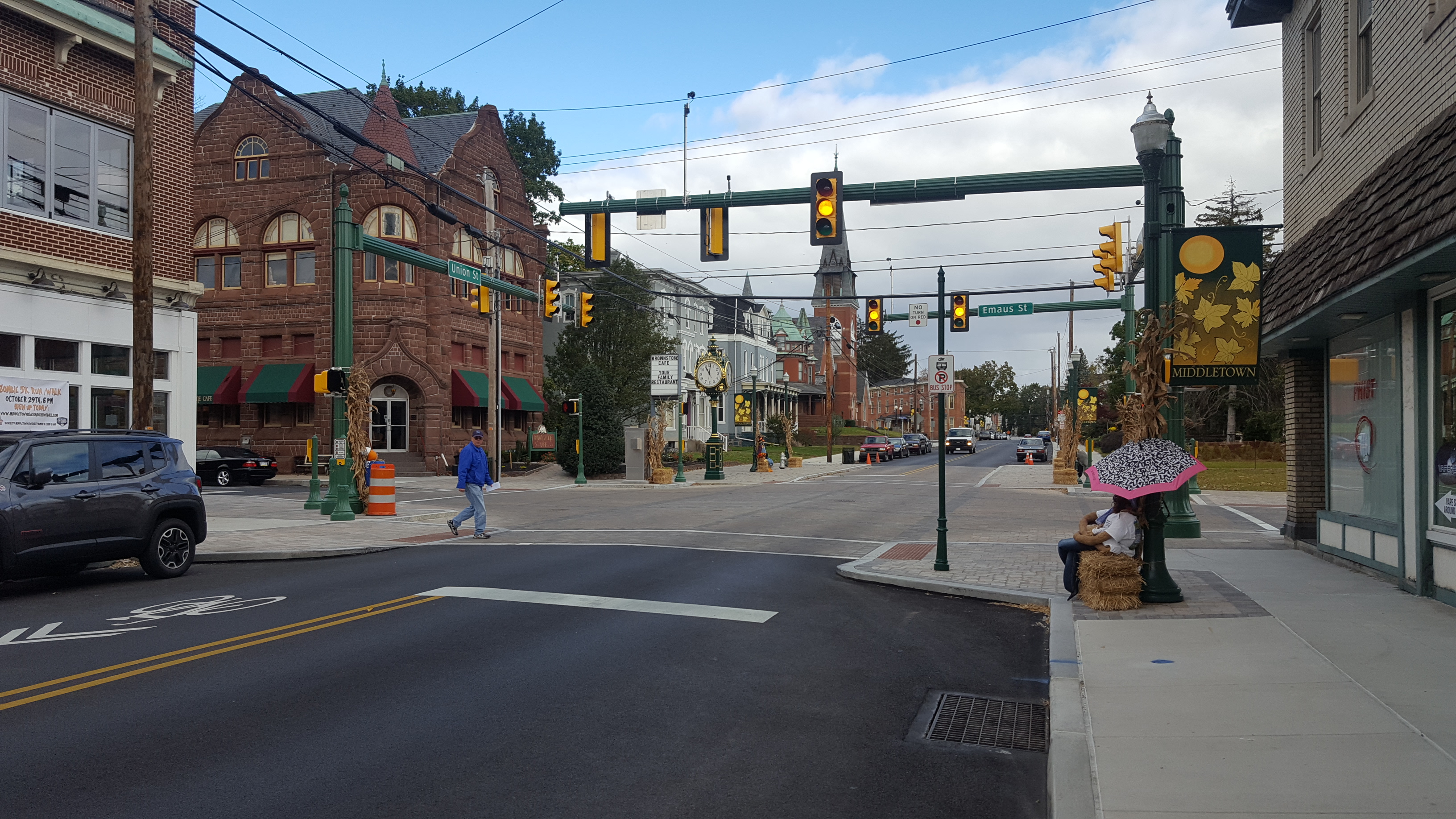
Funded by the Dauphin County Infrastructure Bank: Middletown Borough Streetscape
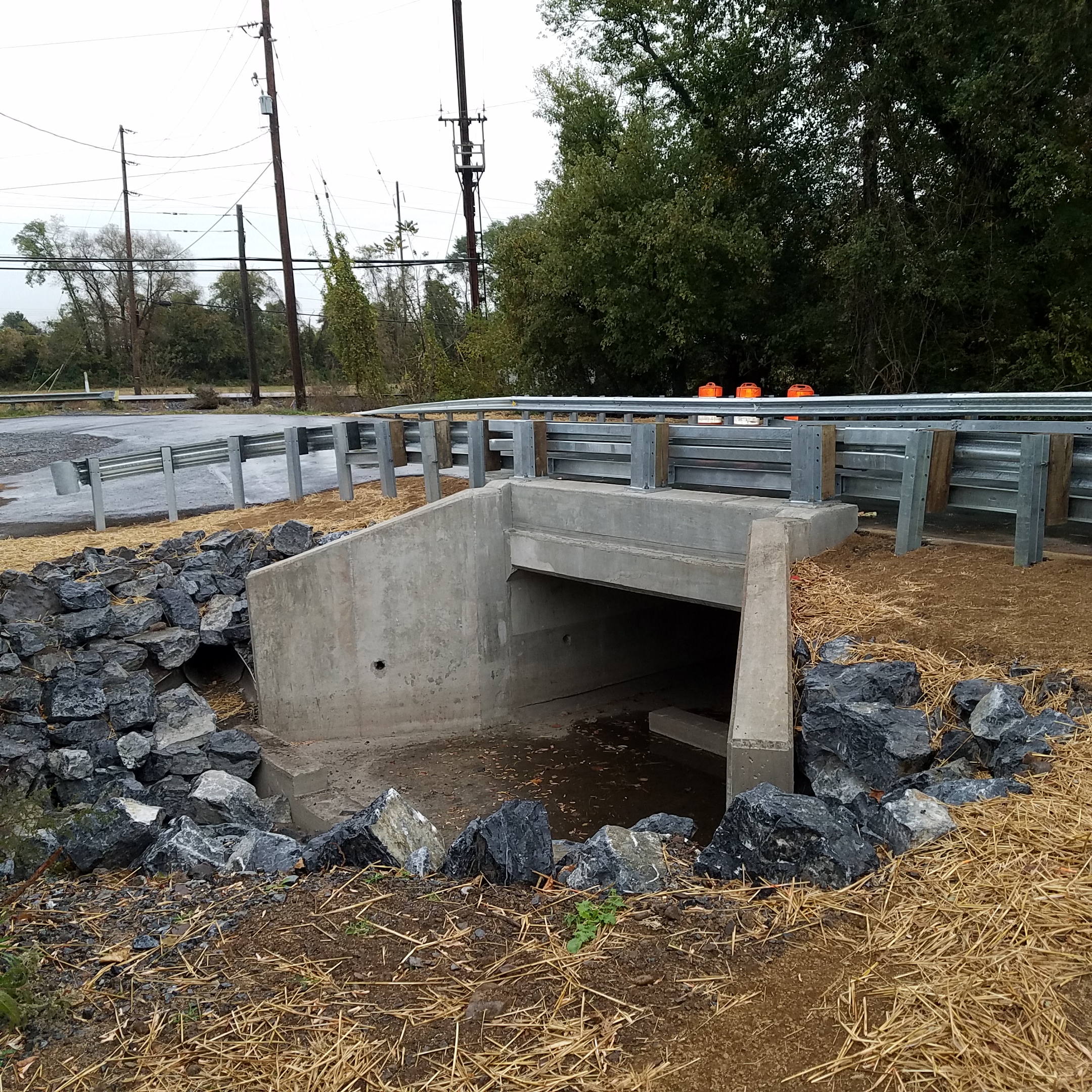
Funded by the Dauphin County Infrastructure Bank: Londonderry Township culvert
https://hrg-inc.com/wp-content/uploads/2017/04/Middletown_733x548.jpg548733Judy Lincolnhttps://hrg-inc.com/wp-content/uploads/2023/01/Primary-Logo-300x138.pngJudy Lincoln2017-04-12 15:37:332024-08-30 09:55:07Dauphin County Infrastructure Bank Honored with Governor's Award
Dauphin County eliminated all of its load-posted, structurally deficient bridges with an ambitious approach to infrastructure funding.
Now the county is using the money it’s saved to fund a new infrastructure program benefiting its municipalities and private sector.
The program has already funded 10 projects worth $11 million with just a $1 million investment from the county.
Read on to learn more about Dauphin County’s innovative infrastructure funding solution.
We begin this story in its final chapter, celebrating the construction of the Duke Street Bridge in Hummelstown Borough and South Hanover Township.
It’s a story that plays out all over America every day: a local government struggling to address aging, deteriorating infrastructure.
But Dauphin County’s story is different. With HRG’s help, they’ve found a solution to the infrastructure funding problem and are turning the page to a new, brighter future: a future they have the freedom to author themselves.
How did they get here? Asset management and capital improvement planning.
Ambitious Capital Improvement Program Eliminates Structurally Deficient Bridges
In 1984, 1/3 of Dauphin County’s bridges were structurally deficient. It’s the kind of problem many local governments – under tight budget constraints – might find insurmountable. But Dauphin County knew that solving big problems is not done in one swift motion; it’s accomplished piece-by-piece.
Accordingly, HRG designed a long-term asset management and capital improvement planning program for them. It has several components:
Inspecting and assessing the condition of each county-owned bridge every two years.
Identifying the appropriate type and timing of maintenance, restoration or replacement measures.
Creating (and updating) a Bridge Improvement Plan that prioritizes these measures over a 10-year period. (Projects are ranked not just on the bridge’s structural condition but also its importance to the local transportation network [as determined by the amount of traffic it carries, whether it’s located on EMS or school bus routes, etc.])
Using this data to seek funding.
Leveraging this funding to complete projects over time, addressing the most urgent needs first and steadily whittling that list of structural deficiencies down to nothing.
By taking a proactive approach like this (vs a reactive approach that addresses bridges only after they’ve failed), Dauphin Countyextends the life of its bridges, maximizing their usefulness while minimizing their life cycle cost.
They also position themselves well for outside funding. A good capital improvement plan includes plenty of data about how many people rely on a piece of infrastructure and how they would be impacted if it were to fail or be taken out of service. This information is very persuasive to funding agencies, who want to make sure their investment provides the biggest possible benefit to the community.
But agencies also want to be sure the money they invest will produce results: that the project will successfully transition from concept to construction. A well-designed capital improvement plan does just that. It shows you have identified exactly what is required to get a project built (including the timelines for permits and approvals) and that you know the full scope and cost of what you want to accomplish. It also shows you have allocated money in advance to get the job done.
Many pages have been written about Dauphin County’s success with this strategy over the years. (It has been featured in Pennsylvania County News and Road and Bridges magazine among others.) In addition, the county has won several awards for projects accomplished using this approach: two Road and Bridge Safety Awards, a National Timber Bridge Award, and a historic preservation award from the PHMC.
But the successful completion of Duke Street in 2017 is not just an ending; it’s the beginning of a whole new story for Dauphin County. With no more load-posted, structurally deficient bridges to address, the county transitioned its focus from replacement to maintenance. This has enabled county officials to create a new program for funding infrastructure, using a portion of the Liquid Fuels funds it used to need for bridge replacements.
Savings Are Used to Encourage Economic Growth With a New Infrastructure Funding Program for Municipalities and the Private Sector
The Dauphin County Infrastructure Bank combines this Liquid Fuels funding with additional money from PennDOT’s Pennsylvania Infrastructure Bank to offer loans to county municipalities, businesses, and non-profits at unbeatably low interest rates (as low as 0.5%) for the construction of roads and bridges under their jurisdiction. Over the past three years, the county has turned a $1 million investment into 10 projects worth $11 million.
Again, Dauphin County has its eye on the long view, using its funds to promote economic development throughout its municipalities.
As their example illustrates, the solution to funding our infrastructure is not a short story; it’s a novel with many chapters and a carefully planned arc. In fact, it’s a story that never ends – with the construction of Duke Street serving as the beginning of a new chapter: the Dauphin County Infrastructure Bank. This program will, in turn, fund many new stories with new characters: municipalities and private developers rewriting the future of their communities one roadway or bridge at a time.
Are you ready to become the author of your community’s future?
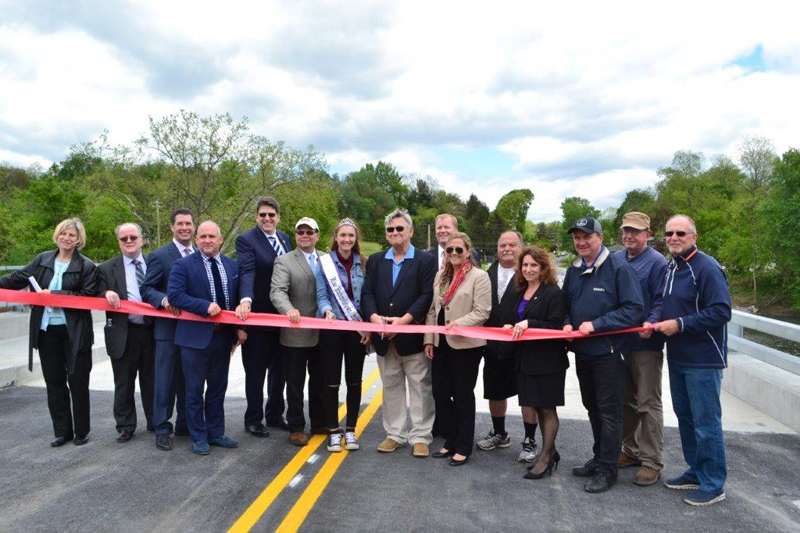
UPDATE: Dauphin County celebrated a ribbon-cutting for the completed bridge in the spring of 2017. Learn more about the bridge in the video below
https://hrg-inc.com/wp-content/uploads/2016/09/Duke-Street-Featured-Image.png548733Judy Lincolnhttps://hrg-inc.com/wp-content/uploads/2023/01/Primary-Logo-300x138.pngJudy Lincoln2016-09-21 12:07:482024-08-30 09:57:03Duke Street Illustrates an Infrastructure Funding Solution

 Herbert, Rowland & Grubic, Inc. (HRG) is pleased to announce that Jeffrey A. Mikesic, P.E., has been promoted to practice area leader for the firm’s Transportation Group.